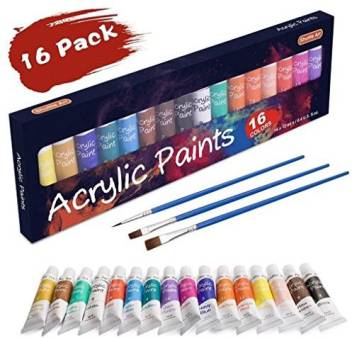
Acrylic Paint Manufacturing Unit
This project report outlines the setup for manufacturing acrylic paints, a fast-drying water-based paint known for its durability, flexibility, and resistance to chalking and fading. The facility is designed to produce high-quality exterior and interior acrylic paints to cater to the growing construction and decoration markets.
Project cost & finance
Cost of Project
figures in ₹ Lakhs
| Building & Civil Work | 3 |
| Plant & Machinery | 12 |
| Furniture & Fixtures | 1 |
| Working Capital | 5.56 |
| Total | 21.56 |
|---|
Means of Finance
figures in ₹ Lakhs
| Own Contribution | 2.16 |
| Term Loan | 14.4 |
| Working Capital Loan | 5 |
| Total | 21.56 |
|---|
Raw materials & machinery
Machinery & equipment8
- Sand mill fitted with pumpBuy on Amazon ↗
Cap. 5 litres shell size and flow rate of 4-5 litres per hour with 5 HP motor
- Variable speed High Speed DisperserBuy on Amazon ↗
Cap. 15 HP motor with starter
- Electronic weighing machineBuy on Amazon ↗
For precise measurement of ingredients
- Brook field viscometer LCV modeBuy on Amazon ↗
Quality testing equipment for viscosity
- Weight per litre cupBuy on Amazon ↗
100 ml capacity measuring cup
- Wet scrubbality testerBuy on Amazon ↗
Testing equipment for paint durability
- DM Water PlantBuy on Amazon ↗
Capacity 25 litres per hour
- Water overhead tank and tube wellBuy on Amazon ↗
10,000 liters capacity with accessories
Raw materials11
- DM WaterBuy on Amazon ↗
Demineralized water used as base solvent
- Wetting AgentBuy on Amazon ↗
Chemical agent to improve pigment dispersion
- HECBuy on Amazon ↗
Hydroxy ethyl cellulose for solution consistency
- Pine OilBuy on Amazon ↗
Additive for paint formulation
- Titanium DioxideBuy on Amazon ↗
White pigment for opacity and color
- China ClayBuy on Amazon ↗
Extender pigment
- CalciteBuy on Amazon ↗
Mineral filler and extender
- Acrylic EmulsionBuy on Amazon ↗
Polymer binder for the paint
- ThickenerBuy on Amazon ↗
Agent to control paint viscosity
- DefoamerBuy on Amazon ↗
Additive to prevent foaming during mixing
- Other Preservatives and EmulsifiersBuy on Amazon ↗
Shelf-life extenders and stabilizing chemicals
Manufacturing process
- Prepare a solution of hydroxy ethyl cellulose (HEC) using water and ammonia.
- Mix pigments and extenders with a small quantity of water and wetting agents using a high-speed stirrer at 1500 RPM to form a mill base.
- Pass the mill base through a sand mill one or more times depending on the desired color shade and pigment hardness.
- Blend the grinded material with remaining water and acrylic emulsion using a low RPM stirrer.
- Slowly add thickener, coalescing agents, defoamers, and buffer solutions to achieve the correct consistency.
- Add water-based stainers to match the required paint shade.
- Perform quality checks on parameters before packing the acrylic paint into small containers for final dispatch.
Market
Acrylic paints are increasingly preferred over oil-based paints due to their fast-drying nature, water solubility during application, superior water resistance when dry, and excellent resistance to chalking, fading, blistering, and peeling on exterior surfaces.
From the project report