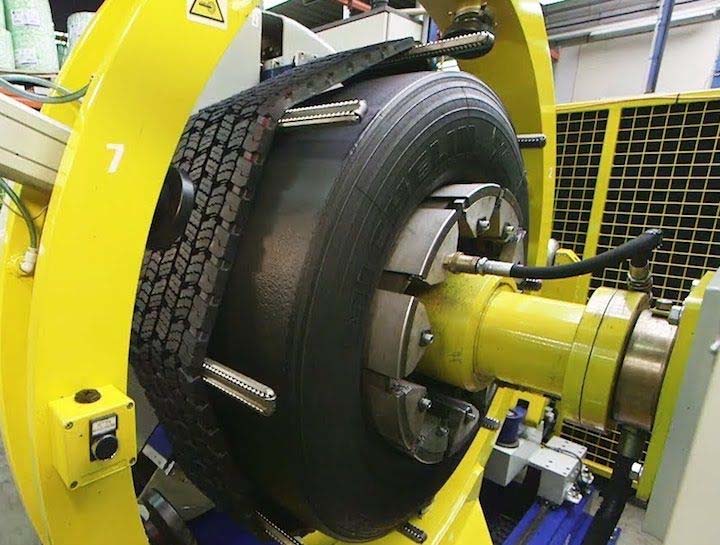
Automobile Tyre Retreading Unit
This project profile covers an automobile tyre retreading unit utilizing the cold process (precured tread rubber method) to renew worn car and vehicle tyres. The retreading process extends the life of used tyres at a fraction of the cost of new replacements, offering high value and performance.
Project cost & finance
Cost of Project
figures in ₹ Lakhs
| Plant & Machinery | 15.45 |
| Furniture & Fixtures | 1.25 |
| Working Capital | 5.56 |
| Total | 22.26 |
|---|
Means of Finance
figures in ₹ Lakhs
| Own Contribution | 2.23 |
| Term Loan | 15.03 |
| Working Capital Loan | 5 |
| Total | 22.26 |
|---|
Raw materials & machinery
Machinery & equipment4
- Buffing machine with dust collector builderBuy on Amazon ↗
Buffing machine for preparing tyre casing
- Work bench envelope Tyre stand GantryBuy on Amazon ↗
Work station and stands
- BoilerBuy on Amazon ↗
Boiler capacity 300 kg/hrs
- Air compressorBuy on Amazon ↗
100 lbs working pressure air compressor with motor
Raw materials4
- Precured Tread RubberBuy on Amazon ↗
Pre-patterned tread rubber for cold process retreading
- Cushion CompoundBuy on Amazon ↗
Un-cured bonding gum layer
- Vulcanizing SolutionBuy on Amazon ↗
Adhesive solution for bonding
- EnvelopeBuy on Amazon ↗
Rubber envelope used during curing
Manufacturing process
- Clean incoming customer tyres to remove dirt and mud, and inspect casing for damage.
- Buff the crown area of selected tyre casings to the required texture and contour.
- Apply cushion compound and precured tread rubber over the buffed area using rollers.
- Cover the tyre buildup with a rubber envelope and place it in the bonder.
- Pass steam at a specific temperature inside the bonder to cure the cushion compound and complete the bonding process.
Market
Retreaded tyres cost significantly less than new tyres while delivering up to 80 percent of a new tyre's performance under similar conditions. Growing commercial vehicle traffic, multi-axle trucks, and operational savings drive strong market demand for retreading services.
From the project report