Baby Diaper Manufacturing Unit
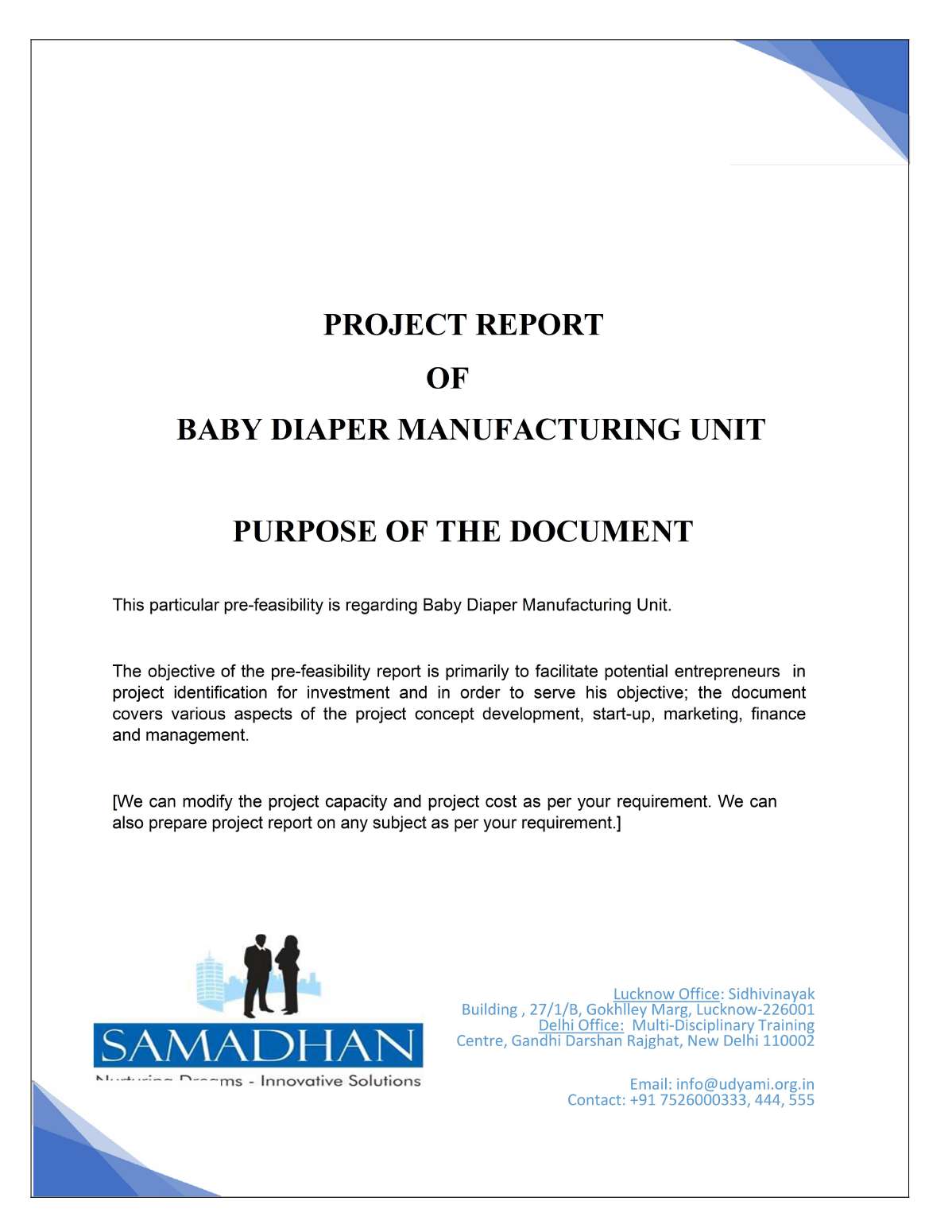
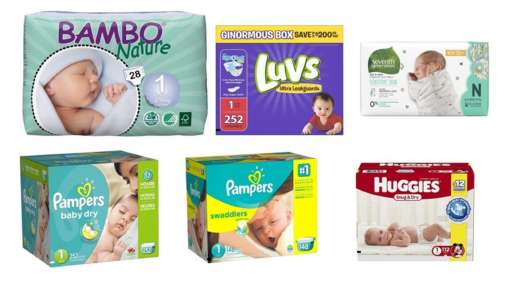
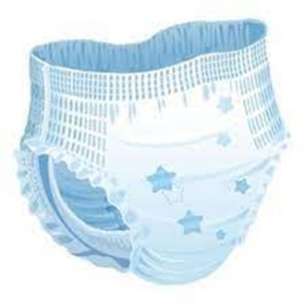
This project profile outlines the establishment of a manufacturing unit for disposable baby diapers. The unit produces comfortable, highly absorbent personal hygiene products engineered to absorb and contain urine and faeces safely.
Project cost & finance
Cost of Project
figures in ₹ Lakhs
| Plant & Machinery | 13.5 |
| Furniture & Fixtures | 0.5 |
| Other Misc. Assets | 1 |
| Working Capital | 5.56 |
| Total | 20.56 |
|---|
Means of Finance
figures in ₹ Lakhs
| Own Contribution | 2.06 |
| Term Loan | 13.5 |
| Working Capital Loan | 5 |
| Total | 20.56 |
|---|
Raw materials & machinery
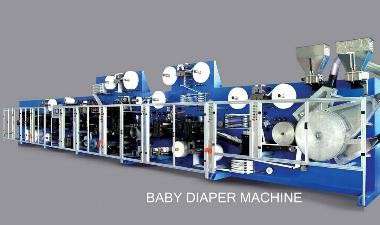
Machinery & equipment4
- Paper pulp crushing machineBuy on Amazon ↗
Machinery to crush rolled wood pulp into cotton-like fluff
- Forming and wrapping machineBuy on Amazon ↗
Machinery to mold and wrap absorbent pads
- Glue spreading machineBuy on Amazon ↗
System to apply hot melt adhesive
- Conveyor systemBuy on Amazon ↗
Conveyor for transporting pads and finished diapers
Raw materials11
- Polyethylene or cloth-like filmBuy on Amazon ↗
Back sheet used to prevent liquid from leaking
- TissueBuy on Amazon ↗
Special tissue paper serving as a carrier for the absorbent pad
- Hot MeltsBuy on Amazon ↗
Adhesive made of resins and oils to bond diaper components
- Hydrophobic Non-wovenBuy on Amazon ↗
Top sheet for leg cuffs to prevent water passing through
- Hydrophilic Non-wovenBuy on Amazon ↗
Main top sheet in contact with baby skin
- ElasticsBuy on Amazon ↗
Spandex or synthetic rubber for cuffs and waist
- Lateral TapesBuy on Amazon ↗
Adhesive or Velcro type tapes for fastening
- Frontal TapesBuy on Amazon ↗
Polypropylene film attached to the front for repositioning
- CelluloseBuy on Amazon ↗
Rolled wood pulp for pad construction and absorption
- Acquisition and Distribution LayerBuy on Amazon ↗
ADL sub-layer used between top sheet and absorbent core
- Sodium Poly-acrylateBuy on Amazon ↗
Super absorbent polymer SAP in fine granular form
Manufacturing process
- Sheets of rolled wood pulp are continuously and automatically fed to the pulp crusher, which crushes the supplied pulp into cotton-like fluff.
- The fluffed pulp is then molded into strips and supported by tissue paper.
- Two absorbent layers of cotton are placed on two sides of the molded strip.
- The waterproof polyethylene film is laid on the sides of the absorbent layers, and the entire strip is wrapped by a non-woven fabric.
- The strip is processed by hot sealing and embossed with figures.
- The continuous diaper strip is forwarded by a conveyor and cut into separate pieces.
- Each diaper is placed into bags, arrayed, and packed for storage and distribution.
Market
Baby diapers are widely used personal hygiene products with steady demand driven by continuous adoption, comfort requirements, and growing health awareness among parents.
From the project report