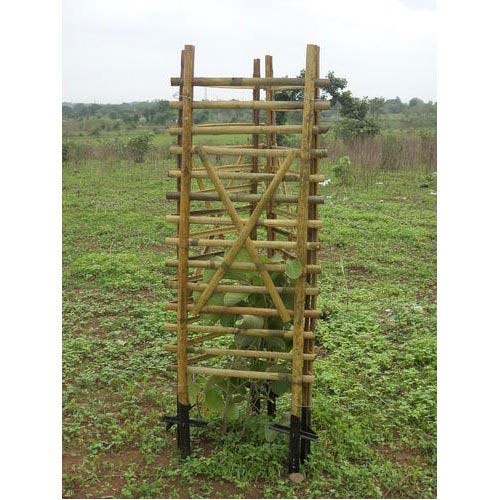
Bamboo Tree Guard Making Unit
A bamboo tree guard making unit manufactures eco-friendly protective shelters for young plants and saplings using processed bamboo and carpentry techniques. These tree guards provide protection from herbivores and harsh weather while allowing adequate sunlight for healthy plant growth.
Project cost & finance
Cost of Project
figures in ₹ Lakhs
| Building & Civil Work | 4 |
| Plant & Machinery | 5 |
| Furniture & Fixtures | 1 |
| Working Capital | 3.33 |
| Total | 13.33 |
|---|
Means of Finance
figures in ₹ Lakhs
| Own Contribution | 1.33 |
| Term Loan | 9 |
| Working Capital Loan | 3 |
| Total | 13.33 |
|---|
Raw materials & machinery
Machinery & equipment4
- Band saw MachineBuy on Amazon ↗
Primary cutting equipment
- Wood Ripening MachineBuy on Amazon ↗
Seasoning plant for bamboo treatment
- Nail GunBuy on Amazon ↗
Pneumatic fastening tool
- Glue spreading machineBuy on Amazon ↗
Equipment for uniform adhesive application
Raw materials4
- BambooBuy on Amazon ↗
Main raw material for manufacturing tree guards
- GlueBuy on Amazon ↗
Adhesive for assembly
- OilBuy on Amazon ↗
Finishing and treatment consumable
- NailBuy on Amazon ↗
Fasteners for assembling components
Manufacturing process
- Procure bamboo and other required materials from local vendors.
- Cut bamboos into manageable sizes using carpenter saws and band saw machines.
- Clean bamboos to remove unwanted materials like leaves and nodal protrusions.
- Season the bamboos in a seasoning plant to reduce moisture content.
- Perform surface cleaning and smoothening using sandpaper or machines to remove exposed fibers.
- Cut the processed bamboo into specific sizes required for the tree guards.
- Assemble the cut parts into tree guards using a combination of nails and glue.
- Perform final edge smoothing on the assembled product prior to dispatch.
Market
Eco-friendly bamboo tree guards are increasingly replacing plastic and cement guards because they allow sufficient sunlight for plant growth, avoid poor photosynthesis, and are cost-effective.
From the project report