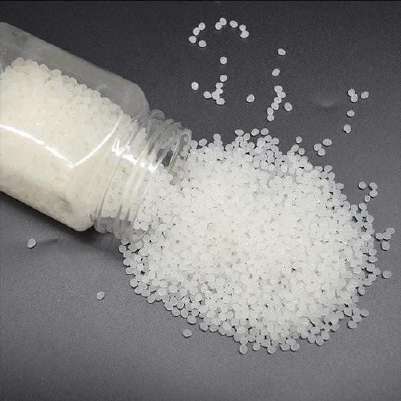
Biodegradable Plastic Pellets
This project profile covers the manufacturing unit of biodegradable plastic pellets (such as PLA and starch-based polymers) derived from agricultural crops and crop residues. The pellets are utilized extensively for eco-friendly packaging, films, bottles, and biomedical devices as a sustainable alternative to traditional plastics.
Project cost & finance
Cost of Project
figures in ₹ Lakhs
| Plant & Machinery | 15.5 |
| Furniture & Fixtures | 0.5 |
| Other Misc. Assets | 1 |
| Working Capital | 7.78 |
| Total | 24.78 |
|---|
Means of Finance
figures in ₹ Lakhs
| Own Contribution | 2.48 |
| Term Loan | 15.3 |
| Working Capital Loan | 7 |
| Total | 24.78 |
|---|
Raw materials & machinery
Machinery & equipment12
- Hammer MillBuy on Amazon ↗
Machine for milling dry raw materials
- Pulping machineBuy on Amazon ↗
Machine for milling wet raw materials
- Industrial mixing vesselsBuy on Amazon ↗
Stainless steel vessels for acid solution and starch conversion preparation
- Fermentation vesselsBuy on Amazon ↗
PLC controlled tanks for converting glucose to lactic acid
- Jacketed reaction vesselBuy on Amazon ↗
Vessel for converting synthesized lactic acid into lactate ester
- Vacuum CrystallizerBuy on Amazon ↗
Crystallizer unit utilizing condenser and booster to maintain vacuum
- Polymerization reactorBuy on Amazon ↗
SS 304 reactor with stirrer for converting lactic acid to oligo-lactic acid and lactide
- Vacuum degasserBuy on Amazon ↗
System to remove volatile gaseous matter from the liquid or melt
- Pelletizer machineBuy on Amazon ↗
Underwater pelletizer to convert the polymer melt into pellets
- Plastic pellets packaging machineBuy on Amazon ↗
PLC controlled automatic packaging machine for exact weighing and sealing
- Heat exchangerBuy on Amazon ↗
Condensing equipment for crystallization processes
- Centrifugal pumpsBuy on Amazon ↗
Pumps for transferring liquids between reactor vessels
Raw materials2
- Plasticizer such as Glycerol, Ethylene Glycol, Polyglycerol, Urea, Citric acid, Polyvinyl AlcoholBuy on Amazon ↗
Additives used during mixing with PLA melt
- Crops and Crop residuesBuy on Amazon ↗
Primary agricultural feedstock such as sugarcane, corn, wheat, or rice
Manufacturing process
- Procure agricultural raw materials such as sugarcane, corn, wheat, or rice, and screen/dry them before chopping or grinding in a hammer mill or milling machine.
- Convert starch and sugar from the crops into glucose through acidic or enzyme hydrolysis.
- Transfer the glucose solution into a temperature- and pH-controlled aerobic fermentation tank with Lactobacillus bacteria to produce lactic acid.
- Acidify and filter the resulting solution, then purify the lactic acid by converting it to a lactate ester, distilling it, and hydrolyzing it back to pure lactic acid.
- Polymerize the pure lactic acid into oligo-lactic acid, convert it to lactide via cyclization, and purify it through distillation and crystallization to form pure lactide.
- Feed the purified lactide into reactors to form Polylactic Acid (PLA) melt and remove volatile components using a vacuum degasser.
- Mix the PLA melt with plasticizers, binders, flexibility agents, emulsifying agents, and colorants in a static mixer.
- Pass the mixture through an underwater pelletizer to form pellets, cool and dry them, conduct quality checks, and pack them into plastic bags for storage.
Market
Biodegradable plastic pellets substitute traditional petroleum-based plastics and find wide applications in municipal composting, eco-friendly plastic films, bags, bottles, medical devices, shrink wraps, and 3D printing.
From the project report