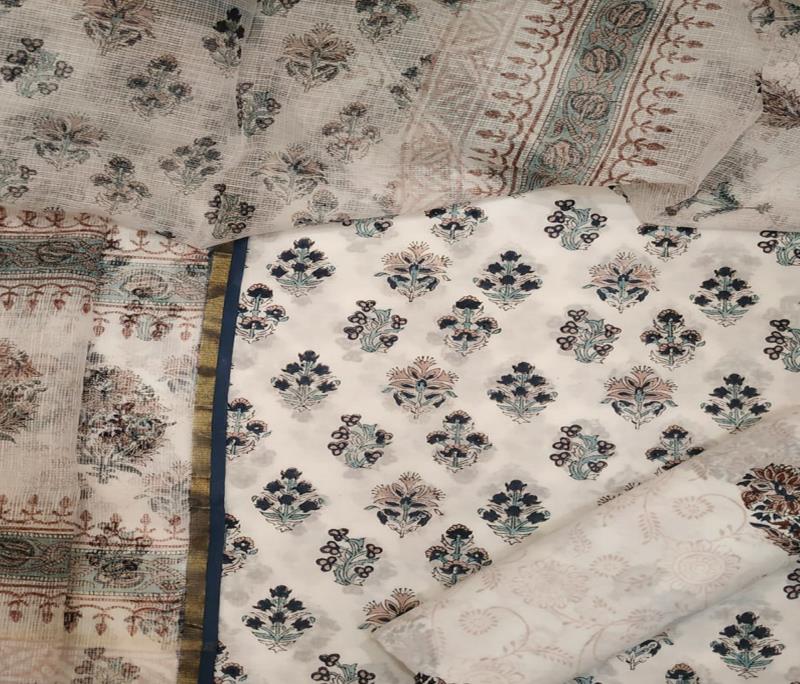
Block Printing Unit (Handblock Printed Suits)
This project profile outlines the setup of a block printing unit focusing on handblock printed suits using traditional techniques and natural or synthetic dyes on fabrics. The facility will have a production capacity of 160 pieces per day and utilizes carved wooden blocks for textile ornamentation.
Project cost & finance
Cost of Project
figures in ₹ Lakhs
| Building & Civil Work | 5.4 |
| Plant & Machinery | 1.5 |
| Working Capital | 4.14 |
| Total | 11.04 |
|---|
Means of Finance
figures in ₹ Lakhs
| Own Contribution | 1.1 |
| Term Loan | 6.21 |
| Working Capital Loan | 3.72 |
| Total | 11.04 |
|---|
Raw materials & machinery
Machinery & equipment5
- KnivesBuy on Amazon ↗
Carving tools
- ChiselsBuy on Amazon ↗
Carving tools
- Small HammersBuy on Amazon ↗
Carving and workshop tools
- DrillsBuy on Amazon ↗
Workshop equipment
- A Brayer (Roller)Buy on Amazon ↗
Ink roller for block printing
Raw materials5
- Block WoodBuy on Amazon ↗
Teak wood for carving blocks
- Block Printing InkBuy on Amazon ↗
Dyes and pigments for printing
- FabricBuy on Amazon ↗
Cotton or silk base fabric
- Mustard OilBuy on Amazon ↗
Used to treat and soften wooden blocks
- PencilBuy on Amazon ↗
For sketching designs
Manufacturing process
- Block Carving: Artisans hand-carv the intricate designs onto wooden blocks, which are then oiled and cured.
- Soaking: Fabrics are prepared and soaked as required for pigment or reactive dyeing.
- Dyeing: Preparation of inks and dyes for application.
- Printing: Wooden blocks are dipped in ink and stamped by hand onto the fabric to create patterns.
Market
The worldwide printed textile market has stable growth driven by shifting consumer preferences for traditional and handcrafted textiles, increasing disposable incomes, and better color retention techniques.
From the project report