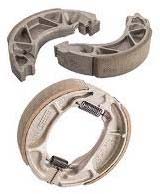
Brake Shoe Manufacturing Unit
This project profile covers the establishment of a manufacturing unit for automotive brake shoes used in drum brake systems for motorcycles, passenger vehicles, and commercial vehicles. The unit utilizes processes such as stamping, welding, hot-pressing, and riveting to produce high-friction brake shoes.
Project cost & finance
Cost of Project
figures in ₹ Lakhs
| Plant & Machinery | 16.53 |
| Furniture & Fixtures | 0.6 |
| Working Capital | 5.86 |
| Total | 22.99 |
|---|
Means of Finance
figures in ₹ Lakhs
| Own Contribution | 2.3 |
| Term Loan | 15.42 |
| Working Capital Loan | 5.28 |
| Total | 22.99 |
|---|
Raw materials & machinery
Machinery & equipment6
- Stamping PressBuy on Amazon ↗
Heavy duty press for metal stamping
- Forging PressBuy on Amazon ↗
Forging equipment for forming components
- Hot PressBuy on Amazon ↗
Press operating at high temperatures for bonding friction material
- Welding machineBuy on Amazon ↗
Equipment for joining brake shoe parts
- Hand GrinderBuy on Amazon ↗
Finishing tool for edges and surfaces
- Riveting MachineBuy on Amazon ↗
Machine for mechanical fastening of linings
Raw materials3
- Asbestos based friction materialBuy on Amazon ↗
Friction lining material for brake shoes
- Steel SheetsBuy on Amazon ↗
Base metal sheets for stamping brake shoe plates
- Other ChemicalsBuy on Amazon ↗
Bonding agents and processing chemicals
Manufacturing process
- Stamping metal sheets to form the base crescent shape of the brake shoe.
- Welding components where necessary to assemble structural elements.
- Hot-pressing friction material onto the metal base.
- Bonding the friction lining securely to the carrier plate.
- Grinding the assembly to achieve precise dimensions and surface finish.
- Riveting components for added structural security where applicable.
- Packaging the finished brake shoes for distribution and sale.
Market
The demand for automotive brake shoes is driven by the expansion of the automotive sector, continuous growth in vehicle sales, urbanization, and increasing aftermarket replacement requirements across two-wheelers, passenger vehicles, and LCVs.
From the project report