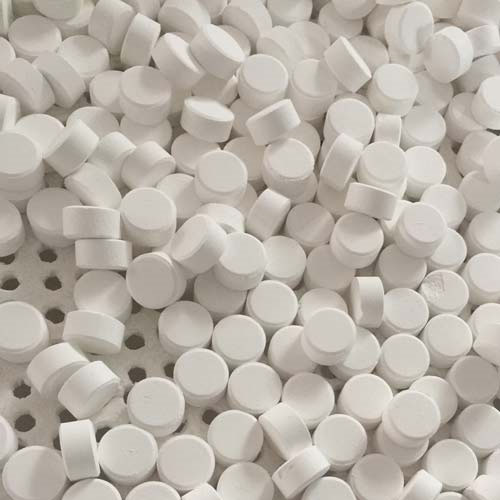
Chlorine Tablets
This project profile covers the manufacturing of chlorine tablets, a vital and low-cost disinfectant used for treating drinking water to make it potable. The unit uses a simple process involving stable bleaching powder, sodium carbonate, common salt, and chalk powder mixed in a sigma mixer and compressed using a tableting machine.
Project cost & finance
Cost of Project
figures in ₹ Lakhs
| Building & Civil Work | 2 |
| Plant & Machinery | 5.2 |
| Furniture & Fixtures | 0.5 |
| Other Misc. Assets | 0.5 |
| Working Capital | 3.1 |
| Total | 11.3 |
|---|
Means of Finance
figures in ₹ Lakhs
| Own Contribution | 1.13 |
| Term Loan | 7.38 |
| Working Capital Loan | 2.79 |
| Total | 11.3 |
|---|
Raw materials & machinery
Machinery & equipment3
- Sigma Mixer 3HP Motor 50Kg CapacityBuy on Amazon ↗
- Tableting Machine with 3 HP MotorBuy on Amazon ↗
- Weighing scaleBuy on Amazon ↗
Raw materials4
- Common SaltBuy on Amazon ↗
- Sodium CarbonateBuy on Amazon ↗
- Bleaching PowderBuy on Amazon ↗
- Chalk PowderBuy on Amazon ↗
Manufacturing process
- Weigh and mix stable bleaching powder, sodium carbonate, common salt, and chalk powders in proper proportions inside a sigma mixer.
- Allow the mixed chemical mass to settle for a specified duration.
- Transfer the mixture to a tableting machine to form chlorine tablets.
- Pack the resulting tablets into plastic containers and affix labels containing batch numbers and expiry dates.
Market
There is a strong demand driven by government focus on providing safe and potable drinking water to rural and urban masses. The tablets can be sold to institutional buyers, bulk water treatment plants, or individual consumers.
From the project report