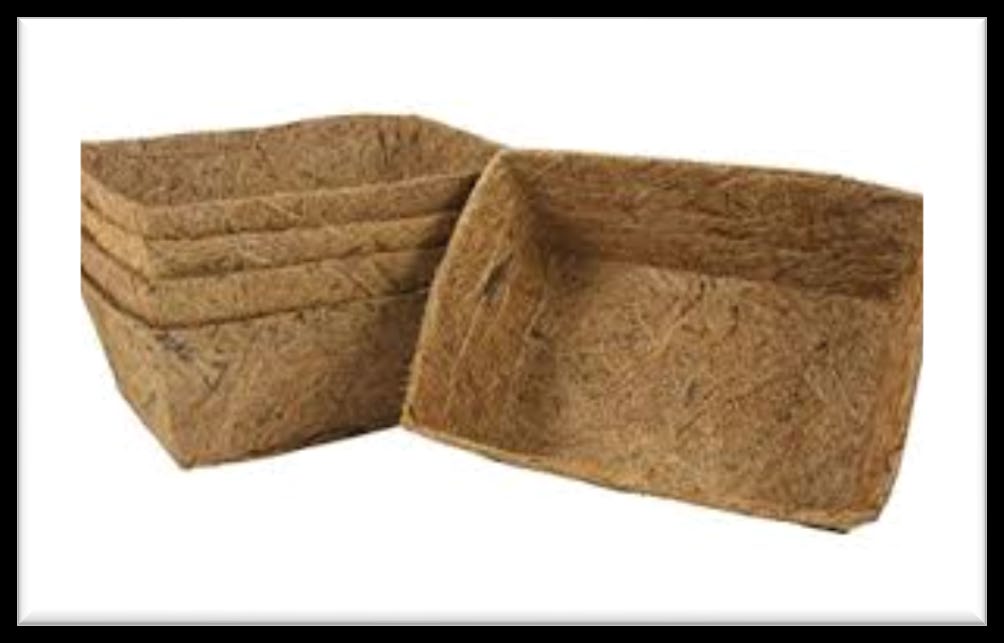
Coir Moulded Tray
This project profile covers the manufacturing unit for coir moulded trays using natural coir needled felt and polymer composites. The eco-friendly trays offer sustainable packaging and utility alternatives that help save tropical forests and promote rural employment.
Project cost & finance
Cost of Project
figures in ₹ Lakhs
| Building & Civil Work | 5 |
| Plant & Machinery | 16.61 |
| Furniture & Fixtures | 0.34 |
| Working Capital | 3.05 |
| Total | 25 |
|---|
Means of Finance
figures in ₹ Lakhs
| Own Contribution | 2.5 |
| Term Loan | 19.76 |
| Working Capital Loan | 2.75 |
| Total | 25 |
|---|
Raw materials & machinery
Machinery & equipment8
- Coir mat impregnating machineBuy on Amazon ↗
Machinery for resin impregnation
- Hot compression moulding machineBuy on Amazon ↗
Machinery for hot press moulding
- Humidity ovenBuy on Amazon ↗
Equipment for curing and drying
- Edge trimming machineBuy on Amazon ↗
Equipment for trimming finished items
- DiesBuy on Amazon ↗
Moulding dies for tray shapes
- Testing EquipmentsBuy on Amazon ↗
Quality check instruments
- Weighing BalanceBuy on Amazon ↗
Weighing equipment
- Electrical fittings & accessoriesBuy on Amazon ↗
Power distribution and accessories
Raw materials2
- Coir needled feltBuy on Amazon ↗
Non-woven fabric made from decorticated coir fibre
- Phenol formaldehyde resinBuy on Amazon ↗
Polymeric matrix material for impregnation
Manufacturing process
- Clean coir fibre is processed through pneumatic suction and needled in a needle loom to produce coir needled felt sheets.
- The coir needled felt is padded and impregnated with phenol formaldehyde resin.
- The resin-impregnated prepreg sheets are dried, cured, and cut to required dimensions.
- The cut prepreg sheets are stacked and loaded into a hot compression moulding machine using dies to form the final tray shape.
- Finished trays undergo edge trimming, testing, and quality inspection before packing.
Market
Coir wood and moulded composites serve eco-friendly packaging and utility needs, offering sustainable alternatives that help replace plastics and tropical timber.
From the project report