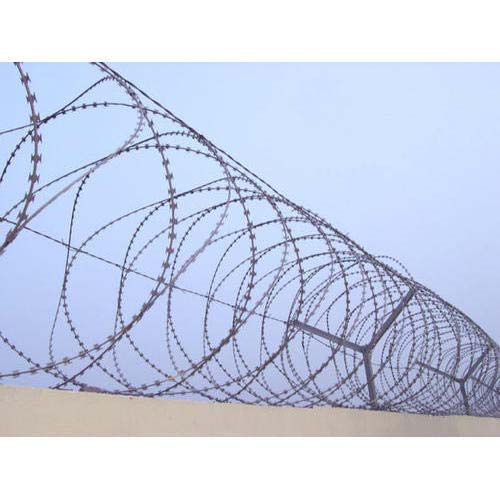
Concertina Wire Making Unit
This project profile outlines the establishment of a manufacturing unit for concertina wire, widely used for military-style obstacles, fencing, and security boundaries. The process involves punching galvanized iron strips, crimping them onto GI wire, and forming coils for security and safety purposes.
Project cost & finance
Cost of Project
figures in ₹ Lakhs
| Plant & Machinery | 12 |
| Furniture & Fixtures | 2 |
| Working Capital | 6.67 |
| Total | 20.67 |
|---|
Means of Finance
figures in ₹ Lakhs
| Own Contribution | 2.07 |
| Term Loan | 12.6 |
| Working Capital Loan | 6 |
| Total | 20.67 |
|---|
Raw materials & machinery
Machinery & equipment10
- Heavy Duty Power Press for Punching of StripBuy on Amazon ↗
50 tonnes with electricals
- 9 Bar Die for PunchingBuy on Amazon ↗
- Feeder for Power PressBuy on Amazon ↗
- De Coiler for Strip BundlesBuy on Amazon ↗
- Recoiling stand for stripsBuy on Amazon ↗
- Wooden Spools for recoiling of StripBuy on Amazon ↗
18 Pieces
- Heavy Duty Air compressor for FeederBuy on Amazon ↗
5HP
- Crimping Machine setBuy on Amazon ↗
For mechanical crimping of strip on wire
- Mechanical Clipping standsBuy on Amazon ↗
For clipping of coils including pliers
- Hammering StandBuy on Amazon ↗
Raw materials2
- GI StripBuy on Amazon ↗
Galvanized Iron Strip used for punching
- GI WireBuy on Amazon ↗
Galvanized Iron Wire used for the core of concertina wire
Manufacturing process
- Procurement of raw materials and punching of GI strips using a power press to create single strips inside a die, then storing them in wooden spools.
- Using a crimping machine to mechanically crimp the stocked strip onto GI wire and deciding the coil diameter according to customer requirements.
- Incorporating GI clips for spring form in wire, followed by hammering and final packaging of the finished goods.
Market
Concertina wire is an essential item for safeguarding houses, gardens, forests, nurseries, and specified prohibited areas such as defense establishments, aerodromes, railways, and warehouses. Demand is driven by construction, urbanization, and increasing security needs.
From the project report