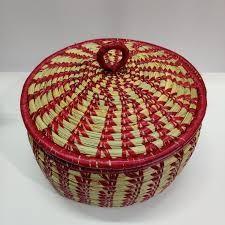
Moonj Basket & Bags Making Unit
The unit focuses on producing decorative and utility products like baskets, bags, mats, and containers using traditional coiling techniques with Moonj and Kaasa grass. The business serves both local markets and major urban centers, providing eco-friendly, handmade items for daily use and cultural rituals.
Project cost & finance
Cost of Project
figures in ₹ Lakhs
| Building & Civil Work | 5 |
| Furniture & Fixtures | 0.6 |
| Working Capital | 5.56 |
| Total | 11.16 |
|---|
Means of Finance
figures in ₹ Lakhs
| Own Contribution | 1.12 |
| Term Loan | 5.04 |
| Working Capital Loan | 5 |
| Total | 11.16 |
|---|
Raw materials & machinery
Machinery & equipment5
- Kainchi (Scissors)Buy on Amazon ↗
- Sirahi (Needle with wooden handle)Buy on Amazon ↗
- Plastic tubBuy on Amazon ↗
- Aluminium containerBuy on Amazon ↗
- Wooden stirring stickBuy on Amazon ↗
Raw materials3
- Moonj and Kaasa grassBuy on Amazon ↗
- Kaccha Rang (color powder)Buy on Amazon ↗
- Edible SaltBuy on Amazon ↗
Manufacturing process
- Dry Moonj and Kaasa grass under the sun for two days.
- Soak grass bunches in water to ensure flexibility.
- Use Kaasa grass as core stuffing and wrap Moonj grass around it to form coils.
- Shape the base and walls of the basket by stitching the coils together.
- Boil water in an aluminum container and add dye and salt.
- Immerse off-white Moonj grass in the boiling solution for coloring.
- Dry the dyed grass under the shade.
- Incorporate dyed grass into the weaving process to create motif patterns.
- Attach handles using grass stitching.
From the project report