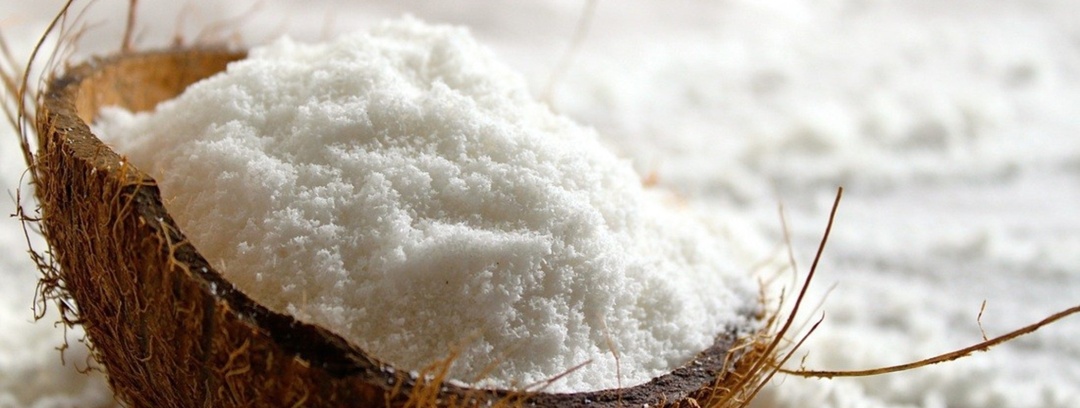
Desiccated Coconut Powder
This project profile outlines the establishment of a desiccated coconut powder manufacturing unit. The process involves selecting fully matured coconuts, dehusking, removing shells and tasta, disintegrating into powder, drying, and grading for use in confectionery and bakery items.
Project cost & finance
Cost of Project
figures in ₹ Lakhs
| Building & Civil Work | 4 |
| Plant & Machinery | 4.5 |
| Furniture & Fixtures | 1.5 |
| Working Capital | 4.44 |
| Total | 14.44 |
|---|
Means of Finance
figures in ₹ Lakhs
| Own Contribution | 1.44 |
| Term Loan | 9 |
| Working Capital Loan | 4 |
| Total | 14.44 |
|---|
Raw materials & machinery
Machinery & equipment7
- Cabinet type hot air drier with blower, motor and other accessoriesBuy on Amazon ↗
- Disintegrator 12" size with 10HP motor and accessoriesBuy on Amazon ↗
- Vibratory sifting machine fitted with GI wire mesh and 2 Hp motorBuy on Amazon ↗
- Aluminium TraysBuy on Amazon ↗
- Platform weighing BalanceBuy on Amazon ↗
- Polythene sealing machineBuy on Amazon ↗
- Other misc items like scrapping knives, trolleys etcBuy on Amazon ↗
Raw materials2
- Coconut with HuskBuy on Amazon ↗
Fully matured coconuts
- Packing MaterialBuy on Amazon ↗
Polythene and boxes
Manufacturing process
- Selection of fully matured coconuts of about 12 months stored for about one month with husk.
- Dehusking and removal of shells from the nuts.
- Scraping off the brown portion (tasta) from the kernel.
- Breaking deshelled coconuts into pieces, washing, and disintegrating into powders of various grades.
- Drying the powder uniformly in a drier at about 180°F with occasional stirring.
- Cooling the dried powder and passing it through a vibratory screen (12, 14, and 16 mesh).
- Packing the segregated material in oil-proof and moisture-proof packaging for retail or bulk sale.
Market
Desiccated coconut is widely used in cookies, cakes, pastries, desserts, puddings, curries, and other coconut-based recipes. It has a good market especially in Northern India where coconuts are not locally produced.
From the project report